The pandemic has exacerbated learning loss for students pertaining to low-income families. On an average, 82% students from low income communities have lost at least one specific language ability and one specific mathematical ability from the pre-pandemic years across all grades. Limited accessibility to digital learning is one of the key contributors to loss of learning (APU, 2021).
While government and private players are addressing the digital divide issue by subsidizing hardware and internet, efforts towards making EdTech affordable, contextualized and effective for Bharat’s students are limited. Bharat EdTech Initiative aims to address this challenge.
Bharat EdTech Initiative (BEI) is a multi-stakeholder collaborative working towards bridging the learning gap for students from low-income communities, by driving effective and equitable EdTech adoption for Bharat. By 2025, BEI aims to improve learning outcomes of 1 million children through unlocking the power of EdTech.
BEI in year l, bridged the access issue for 96K students, with 80% of them from government schools across 10+ states. BEI partnered with 5 EdTech products and 9 non-profits, to drive quality EdTech engagement and learning on ground. Building on the learnings of year I, BEI in year ll is focused towards building scalable EdTech adoption solutions and generating quality evidence by driving improved EdTech engagement and learning for 125,000+ students across 10+ states.
As a multi-stakeholder ecosystem initiative, BEI is built on the following principles –
- Collaborative approach – BEI believes in unlocking the potential of the EdTech sector by bringing together diverse stakeholders with complementary capabilities.
- Outcomes driven – BEI has embedded the outcomes driven approach across multiple levels of the program. This enables us to consistently work towards ambitious targets.
- Powered by data & evidence – To create an outcome driven orientation, BEI leverages data and evidence collection and dissemination routines.
- Design for scale – BEI aims to create scalable EdTech adoption solutions as the opportunity gap is massive.
- Student impact – While aiming to follow a systemic approach, BEI continues to keep student impact (engagement and learning) at the center of its work.
Financial Structure
Bharat EdTech Initiative is a philanthropic collective, which is supported by multiple institutional and CSR donors. BEI has secured ~USD 4 million in year II. The funds received are utilized to provide access to EdTech solutions to students, support their learning journey through provision of on-ground support, assess their learning journey periodically to evaluate programmatic impact, and generate as well as disseminate quality evidence in the ecosystem.
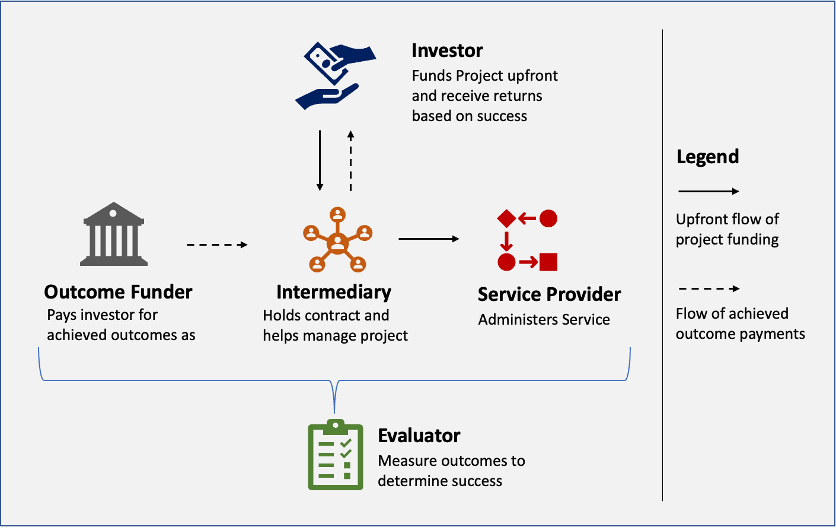
BEI makes performance based payments/grants to product and service providers. These payments are mainly of two types:
- Milestone based payments: processed to cover the costs incurred by the providers, only upon meeting certain pre-aligned payment criteria. As the program’s anchor funder, Michael & Susan Dell Foundation along with other CSR donors offers milestone based funding to BEI
- Outcome based payments: paid to the service providers in the form of incentives (over and above their costs) on achievement of exemplary outcomes. On an average, incentives amount to 23% of cost per child, making it a strong motivational factor that enables partners to achieve goals and go beyond consistently. British Asian trust in collaboration with BEI procures outcome based funds
Programmatic goals, milestones, and payment/grant cycles are pre-decided with partners at the stage of contracting and are legally vetted by all parties involved. Strict data and evidence collection routines are put in place to ensure credibility of results produced by partners.
Key Insights/Learnings
In year I, BEI has successfully identified enablers of effective EdTech adoption and has established proof points for driving EdTech engagement and learning in India-3.
Key enablers of EdTech adoption
- High quality India-3 EdTech product – Asynchronous and low-tech EdTech products with curriculum aligned content available in regional languages, are better suited for Bharat’s students. Students engage best with personalized adaptive learning content that is customized to their individual learning needs
- An enabling environment encompassing device and internet access, parental buy-in, and the support of a compassionate adult (parent/teacher/community champion), are essential to drive effective engagement and learning on EdTech.
- Contextualized EdTech driven learning routines building the ‘school-to-home’ continuum, facilitated by on-ground influencers are essential to enable meaningful student engagement and learning.
Key learnings from deploying a milestones based payment structure and an outcomes fund
The EdTech sector so far has focused on input (product) and output (distribution) but has not been held responsible for outcomes – engagement and learning. BEI is trying to usher this mindset shift in the ecosystem using performance-based payments and incentives, as described below –
- Who to incentivize – While access to a quality EdTech product is important, what becomes even more crucial is the ecosystem of support that students have access to on-ground, that helps them to use EdTech effectively. Thus, BEI has adopted a dual performance-linked structure to ensure accountability on product and engagement sides – EdTech providers and non-profit organizations are paid only on the basis of students who have been activated on the learning platforms, encouraging them to push for high activation rates and consistent engagement.
- What to incentivize – Initially, the project tied learning outcomes improvements to a proportion of payments. However, a review of data and learnings from this year showed that a critical link between EdTech product and learning outcomes was missing – consistent and appropriate levels of usage or engagement. Additionally, while improved learning outcomes remain the end goal for any EdTech intervention, in absence of robust and comparable data and benchmarks, it was too soon to start using learning outcomes for payment linkages. Therefore, in year II, BEI pivoted to incentivising engagement over learning outcomes, ensuring a sharp focus on a critical causal link in the impact thesis.
- How to incentivize – Enablers of milestones based payment structure include thorough contracting processes, strong data driven governance practices, appropriate and consistent communication about incentives to the partners and trust-based relationship building efforts with partners.
Impact to Date
As an EdTech intervention for India 3, keeping students at the center of its work, BEI captures its impact on three primary parameters – programme reach, EdTech usage/engagement, and student learning.
BEI’s Impact in year I
In terms of reach in year I, BEI provided curriculum aligned EdTech content and on-ground support to 96,000 students from families with monthly income of less than INR 25,000. 70% of students were from rural India across 10 states.
In terms of EdTech engagement/usage –
- BEI showcased a 3x increase in % weekly active users* with consistent weekly usage of 1 hr between October 2021 and April 2022
- Based on internal dipsticks conducted, on an average BEI students spent 3.5x more time on EdTech apps in comparison to their retail users in a week.
In terms of student learning outcomes –
- 45% of BEI’s students grew by one of more Equivalent Years of Schooling (EYOS)**
- 30% students grew from basic to intermediate proficiency* in Maths across grades 3,6, and 8.
In year ll, BEI’s is focusing on creating stronger impact across all three aforementioned parameters while codifying on-ground EdTech adoption strategies and generating quality evidence for the ecosystem.
Student testimonials
“The biggest challenge of online schooling was we had no medium to clear our doubts. Online app helped us in clearing doubts at home. Thank you Bharat EdTech Initiative”- Satyankita Singh, Grade 10, Bal Bharti Public School Jaithari, Anuppur, Madhya Pradesh.
“Online learning has deepened my conceptual understanding of the subject. Currently we have it for English and Math. I would like a similar app for other subjects such as History, Geography and Science.” – Arohi Manishdamle, Grade 6, Zila Parishad School Sinnar, Nashik, Maharashtra
Note:
*%Weekly active users are defined as number of students who spend more than 5 minutes on the EdTech app, in a week
**EYOS – Equivalent years of schooling is a global metric to communicate learning gains in concrete terms. 1 EYOS is equal to one year of schooling in terms of learning outcomes. The metric allows for a comparison of learning gains across disparate education systems around the world.