Introduction
Sanitation is a basic need of all citizens, and thus needs to be provided as a service to all citizens. In recent years in India, a much-needed focus on sanitation has emerged through the Swachh Bharat Mission (Clean India Mission). While it focused on building individual household toilets initially, in its second phase the focus is also on safe conveyance and treatment of waste. In 2017, Government of India adopted a policy on “Faecal Sludge and Septage Management (FSSM)”. It aimed to contribute to achieving the goal of SDG 6.2, with good toilets and their use, as well as proper management of faecal waste across the service chain.
Over 64% Indians use on-site sanitation (OSS) system. [1] More attention is needed on their regular maintenance and safe disposal of faecal sludge and septage from septic tanks/pits. Irregular desludging affects effective functioning of septic tanks and the quality of effluent discharged. This has negative environmental impacts on groundwater and surface water, and eventually on the health of local population. For this, regular desludging of these facilities is needed.
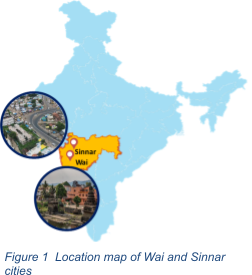
Wai and Sinnar, two cities in Maharashtra, with a population of 43,000 and 80,000, have demonstrated that citywide scheduled desludging services is possible through a public private partnership (PPP) arrangement. For this, CWAS-CEPT through a project funded by the Bill and Melinda Gates Foundation (BMGF) provided technical and transaction advisory support to these city governments. Both cities have introduced scheduled desludging as a public service to all properties including households in slums or low-income communities. This was done through a public private partnership (PPP) arrangement and funded through a sanitation tax collected along with property tax.
Performance-Linked Annuity Model for Scheduled Desludging
The PPP arrangement was designed as a performance-linked annuity model (PLAM). The local governments of Wai and Sinnar entered into 3-year contracts with private service providers for scheduled desludging of septic tanks. Investment in desludging trucks was done by private operators. The PLAM operates on the principle of pay-for-results. Instead of traditional fixed-cost contracts, payments to private operators were linked to the number of septic tanks desludged. This incentivized the operators to deliver the expected results efficiently and effectively.
For the financial sustainability of the scheduled desludging services, both Wai and Sinnar implemented a sanitation tax in conjunction with the property tax system. The revenue generated from this tax was used to cover the costs of the service provision. By integrating the sanitation tax with the property tax, the burden was distributed equitably, with larger properties contributing more. This created a predictable revenue stream, and also made the desludging service affordable for low-income households. The sanitation tax collections in Sinnar city cover annuity payments for scheduled desludging, whereas the Wai local government also allocates funds from property tax transfers to finance the scheduled desludging service.
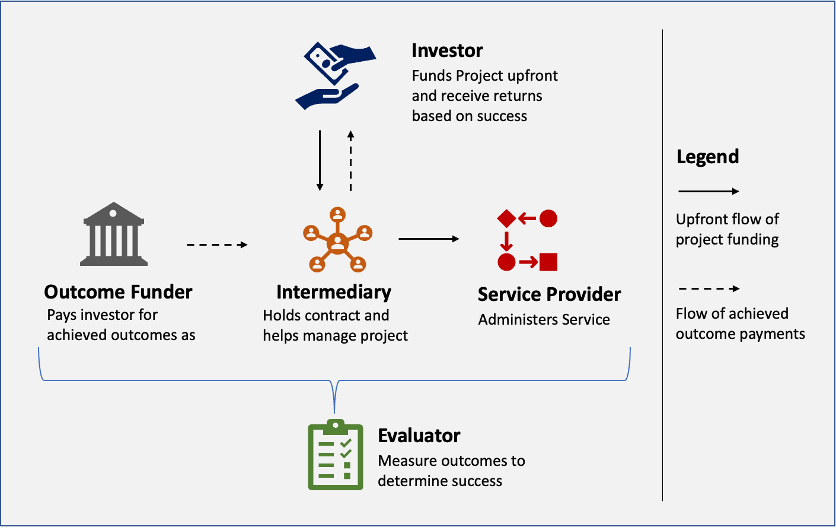
Monthly payments to the private operators are done through an escrow account. The financing model is described in figure no 2. The escrow account is a tripartite agreement between the local government, private sector, and a local bank. The local government is required to maintain three months of payment as a reserve fund to safeguard against risk of delayed payment. This ensures accountability by the local government for timely payments to the private service provider. The focus is on the outcomes achieved rather than the inputs or materials used. This approach ensures transparency, fosters continuous improvement, and establishes a clear framework for accountability between local government and private operators.
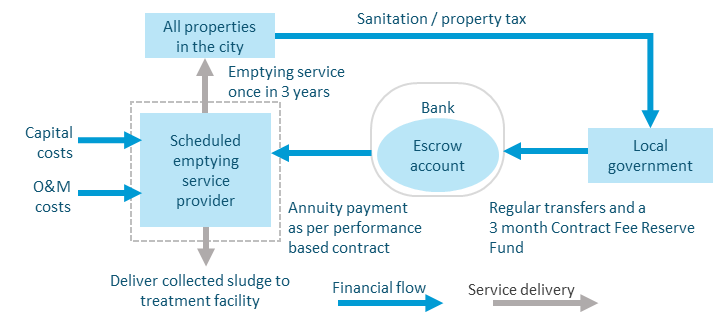
Figure 2 Performance-based Annuity Model for Scheduled Emptying. Source: CWAS, CEPT University
Benefits and Impact
The performance-linked annuity model brought about several benefits and positive impacts. Firstly, it ensured regular emptying of septic tanks, leading to improved sanitation and reduced health risks for the communities in Wai and Sinnar. Secondly, the transparent payment structure incentivized the private operators to perform well, resulting in increased efficiency and effectiveness of the desludging services. Thirdly, the model enabled better financial planning for the local governments, as payments were predictable and were directly tied to the outcomes achieved. The model is equitable and inclusive as it covers all areas including slum households.
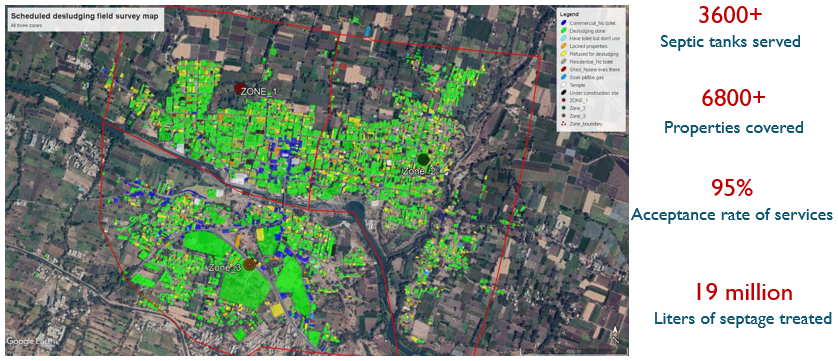
Figure 3 Scheduled desludging map of Wai.
Through this model, Wai has now successfully completed the first 3-year cycle of scheduled desludging in the city. Under this, 6800 properties were served with a 95% acceptance rate by local residents. Over nineteen million litres of septage were treated at the Wai treatment plant. After success of the first round of scheduled desludging, the second cycle was commissioned by the Wai local government through the same PLAM arrangement, using a well-designed contract framework.
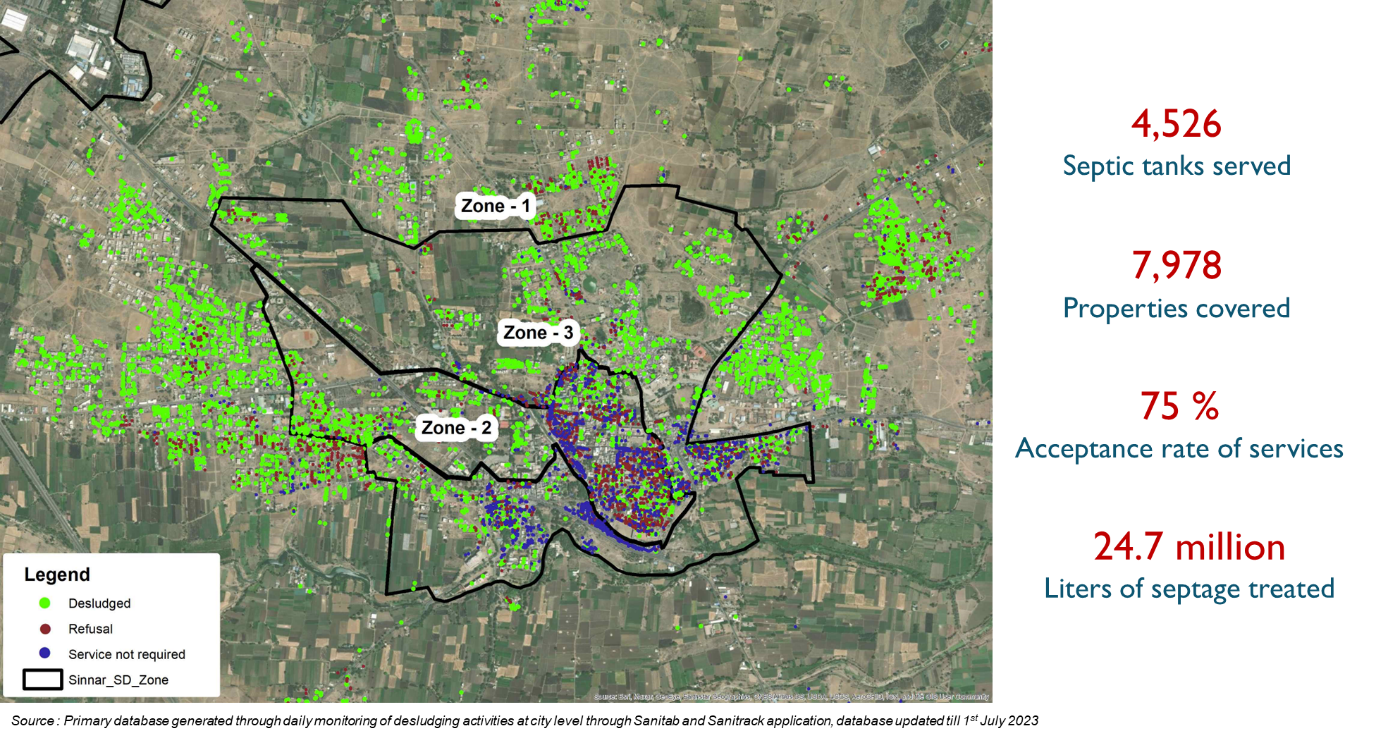
Figure 4 Scheduled desludging map of Sinnar
Through this model, the second city of Sinnar is expected to complete the first cycle of scheduled desludging in the city this year. Out of 11,800 properties, 7978 properties have already been served by scheduled desludging service, and ~25 million litres of septage have been treated and reused at the Sinnar treatment plant.
These outcomes of scheduled desludging in both the cities are monitored using SANITRACK, a digital monitoring tool specially developed for this purpose. The achievement has served as a model for sustainable and inclusive sanitation solutions for Indian cities.
Replicability and Scalability
Wai and Sinnar experience have led to national and international recognition for scheduled desludging. In November 2022, the government of Maharashtra issued a circular addressing all the Urban Local Bodies (ULBs) in the state to implement scheduled desludging in their cities. Several cities in Maharashtra, including Satara, Kolhapur, Pune, Igatpuri, Vita, and Ichalkaranji have already initiated plans to implement scheduled desludging in the areas with onsite sanitation systems.
The success of the PLAM approach in Wai and Sinnar has paved the way for its replication and scalability. The model can be customised and tailored to suit the specific needs and context of different regions, making it adaptable and flexible. With the right institutional support and collaboration between public and private sectors, the model can be replicated on a larger scale.
Conclusion
The performance-linked annuity model has demonstrated its transformative power in improving sanitation services in Wai and Sinnar. By linking payments to results achieved, this model ensures accountability, efficiency, and financial sustainability. By replicating and scaling this innovative approach, we can move closer to achieving SDG 6.2 on universal access to safe and sustainable sanitation for all.