Developed by RTI International, under the Australian Government’s Water for Women Program, the part 2 of this knowledge series aims to assess reasons for limited blended finance in WaSH programs, list prevailing examples for blended financing therein, and how these could be scaled up.
Context for Discussion
Blended Finance often uses philanthropic funding to mobilise private investment, through a variety of financial instruments & mechanisms. Each dollar of concessional capital deployed, on an average, mobilises AU$ 4 of commercially priced capital. At this pace, the Indian WaSH ecosystem will require AU$ 3.5 bn. of concessional finance annually.
Philanthropic capital in India increased by 23% to ~AU$ 12.5 bn. in 2020. This stems from four sources: foreign (24%), domestic corporate (28%), domestic high net-worth individuals/ families (20%), and other retail investors (28%). Despite availability of significant philanthropic capital, there are only a few instances of it being deployed for blended finance facilities for sustainable development including WaSH. There could be two principal reasons for this:
- WaSH is not a focus/ favoured sector for philanthropic action in India.
- Market barriers prevent philanthropy being used for creating blended finance options.
Insights from the Consultation
Philanthropic capital flow in WaSH is limited: In FY 2019-20, WaSH represented just 3% of total domestic corporate philanthropy. Amongst high net-worth individual/ family contributions, WaSH is a subset of ‘Others’ category which cumulatively adds up to just 6%[2]. Empirical extrapolation of these results suggest that annual domestic philanthropic contribution to WaSH is barely AU$ 0.3 bn. compared to the annual concessional finance demand of AU$ 3.5 bn. (<10%).
Awareness of blended finance concept is limited: There are a handful of cases where blended finance has been successfully implemented in India. While small and medium-sized donors remain conceptually unaware of blended finance facilities, lack of detailed research on these case studies deter larger donors from exploring them. Thus, they usually prefer to adopt traditional grant-making approaches with low risk and visible impact.
Regulatory constraints exist: Philanthropic capital flows in India is governed by two regulations: (1) the Companies (Corporate Social Responsibility Policy) Rules which govern domestic CSR flows, and (2) Foreign Contribution Regulation Act (FCRA) which regulates receipt of foreign contributions or aid from outside India to Indian territories. Certain provisions in both these regulations affect donors’ ability to engage in blended finance facilities.
Example of Innovative Blended Finance Structures
Despite the limitations described above, certain programs, of the WaSH sector and beyond, have still been able to pursue blended finance structures due to innovation in the business model adopted. This suggests that these structures have been able to overcome the regulatory barriers. For example, in the following examples, philanthropic capital is non-refundable and completely utilised. Hence, if the source of this philanthropic capital is CSR funds, such spends are eligible to receive the fund utilisation certificate.
One-time Non-returnable Grants (Concessional Finance) for Prompting Equity Investments (Commercial Finance)
Context: Under the Water for Women Fund initiative, RTI International fosters partnerships between WaSH-based private sector, NGOs, and prospective entrepreneurs, from marginalised groups, identified by these NGOs. The partnerships facilitate increased access of WaSH products/ services, offered by the private sector, in the marginalised communities. The entrepreneurs act as a WaSH awareness and product/ service sales medium, earning a margin against sales. The NGO trains and coordinates efforts amongst the several identified entrepreneurs.
Need for Concessional Finance/ Additionality: Ordinarily, any business venture requires upfront equity investment from the entrepreneur. However, in this case, the entrepreneurs hail from economically weak and marginalised backgrounds who are not financially able to make upfront equity investments.
Deployment Mechanism of Concessional Finance: CSR funds (say, AU$ 100) is extended as a one-time non-returnable grant to NGOs which is used by the latter to procure the first batch of WaSH products, on behalf of the entrepreneurs. The entrepreneurs sell these products along with a premium (say, 20%). From the 2nd cycle onwards, the NGO retains just a supervisory role while the entrepreneur invests the most of the earned funds (say, AU$ 110 out of AU$ 120) to purchase the next batch of products. These are again sold at a premium so that the entrepreneurs’ total fund corpus swells and the cycle repeats.
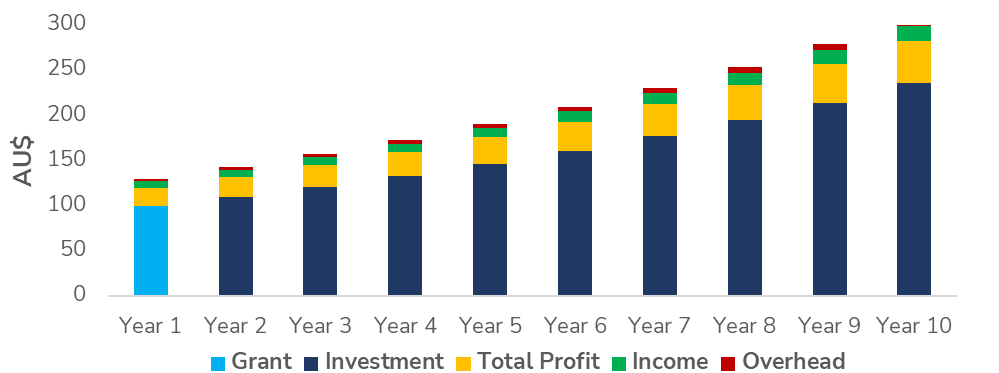
Figure 1. [Deployment of Concessional Finance as One-time Non-returnable Grants]
Concessional Finance Prompting Equity Investments: The initial grant (of value AU$ 100), is prompting ever-increasing equity investment in the WaSH business model. Consequently, the leverage achieved by the concessional finance is also continuously increasing in every cycle.
Outcome-based Aid (Concessional Finance) for Prompting Impact Investments (Commercial Finance)
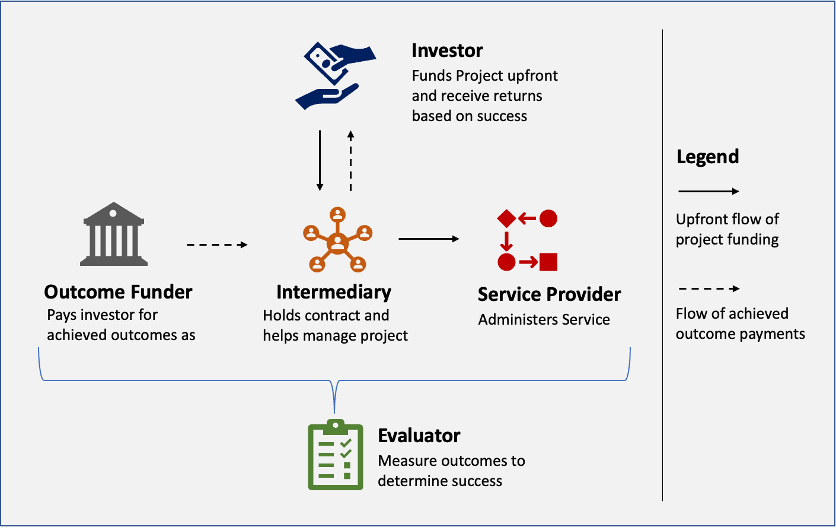
Definition: Outcome-based aid refers to conditional release of funds, from philanthropic sources, for repaying investors along with pre-determined returns. Usually, the condition precedent is around achievement of minimum or desired project outcomes.
Context: Impact investors are willing to provide upfront capital for programs which create social/ developmental impact as well as provide financial returns.
Need for Concessional Finance/ Additionality: Most developmental programs do not have a defined revenue stream and hence, are unable to offer financial returns to impact investors.
Deployment Mechanism of Concessional Finance: Philanthropic sources, who have a similar developmental vision as the impact investor(s), assure desired financial returns to the impact investor upon achievement of developmental targets. The risk of non-achievement lies, however, with the impact investor. Achievement of targets is validated by an external evaluating agency.
Concessional Finance Prompting Impact Investments: Introduction of a well-defined revenue and returns improves eligibility of prospective projects for requesting impact investments. value AU$ 100), is
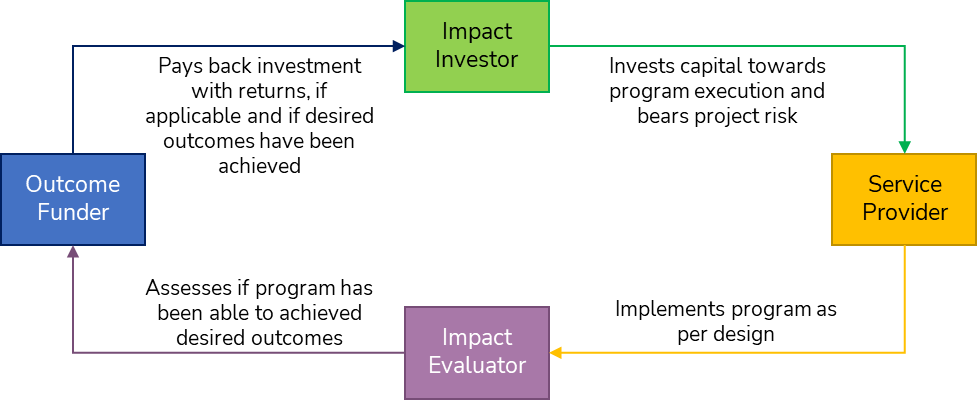
Figure 2. [Deployment of Concessional Finance as Outcome-based Aid]
Performance Guarantees
Context: Most developmental programs possess varying degree of risks. The likelihood of occurrence of these risks and non-achievement of outcomes are challenging to anticipate. This may deter funders from participating, especially in extremely ambitious/ risky developmental programs.
Deployment Mechanism of Concessional Finance: Two elements of philanthropic support are involved: (1) the Principal Funder and (2) a second philanthropic capital provider which extends a certain performance guarantee in the event of non-achievement of developmental outcomes using primary funds from Principal Funder.
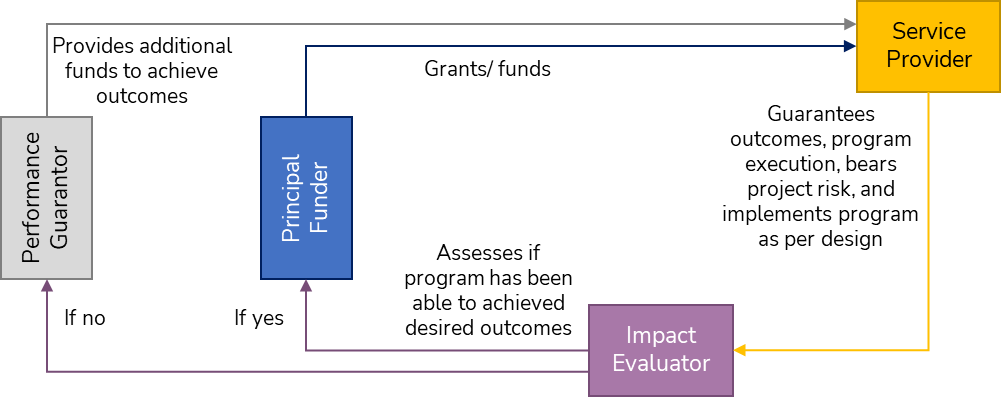
Figure 3. [Deployment of Concessional Finance as Performance Guarantees]
Resolving Other Challenges to Scaling Innovative Blended Finance Structures in WaSH Sector in India
While these examples demonstrate options exist to invest philanthropic capital towards blended financing structures, while staying within regulatory constraints, creating awareness on such structures and their impacts, even amongst large foundations, may inspire these agencies to pursue and build more of these.
Limitations in philanthropic capital flow in WaSH could be overcome by designing WaSH programs to bring in convergence with ‘philanthropy magnets’ like Education, Health, and Rural Development sectors. Examples include WaSH in schools, WaSH in healthcare institutions, WaSH-based livelihoods, etc.