GIFT City Regulations and ESG Funding: Blended Finance in Focus

Rahul Rishi
Leader- Social Sector Practice,
Nishith Desai Associates
Radhika Parikh
Head of GIFT City office, Leader in Fund Formation Practice and Private Client Practice,
Nishith Desai Associates
Sehar Sharma
Paralegal,
Nishith Desai Associates
Nishith Desai Associates is among Asia’s most innovative law firms and a go-to specialist for companies around the world, looking to conduct businesses in India and for Indian companies considering business expansion abroad. Its Blue Sky Thinking and Research Campus, Imaginarium Aligunjan, is an international institution dedicated to designing a premeditated future with an embedded strategic foresight capability. The firm has been consistently ranked as one of the Most Innovative Law Firms worldwide and has received the Financial Times RSG award 4 times in a row, (2014-2017) as the Most Innovative Indian Law Firm.
GIFT City Regulations And ESG Funding: Blended Finance In Focus
In the ever-evolving landscape of sustainable development, the convergence of public and private capital, termed ‘blended finance’, has emerged as a beacon of hope. This strategic fusion addresses the financing gap inhibiting the attainment of Sustainable Development Goals (“SDGs”). In the Indian context, Gujarat International Finance Tec-City (“GIFT City”) stands as a testament to regulatory prowess and a fertile ground for channelling blended finance initiatives towards sustainable progress.
Understanding Blended Finance: A Transformative Approach
Blended Finance, the amalgamation of public and private capital, aims to bridge the gap between commercial investment and impactful development projects. This mechanism strategically utilizes resources to attract private sector participation in ventures that might be considered too risky, thereby advancing the SDGs without distorting market functions.1
The approach employs three key strategies: technical assistance,2 risk underwriting and market incentives to incentivize and mobilize private capital, ensuring positive developmental outcomes.3
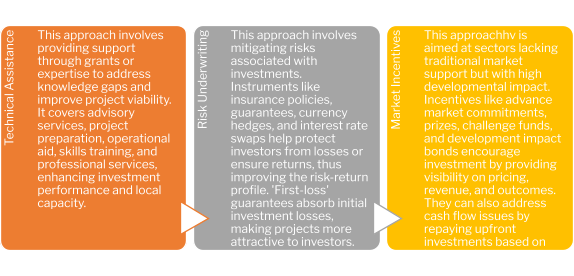
Figure 1 Types of Blended Finance
Principles Governing Blended Finance
The success of blended finance hinges on core principles: additionality, crowding-in, minimum concessionality, commercial sustainability and upholding high standards as mentioned below in Figure 2. However, challenges persist due to the absence of universally agreed definitions and transparent data collection methods, hampering effective assessment of its true impact.4
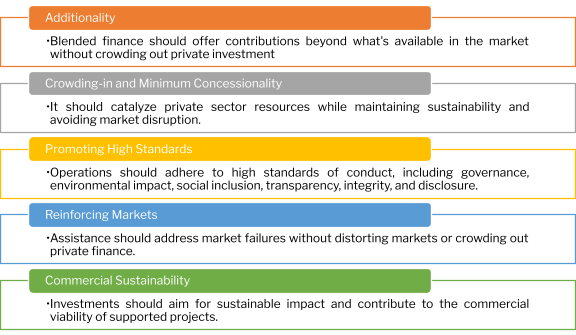
Figure 2 Principles Governing Blended Finance
GIFT City: A Catalyst for Blended Finance Innovation
GIFT City, nestled in Gujarat, India, serves as an epitome of India's aspirations in the global financial arena.5 With its Special Economic Zone (“SEZ”) status and robust regulatory framework under the International Financial Services Centre Authority (“IFSCA”). GIFT City beckons multinational corporations, financial institutions and service providers with tax incentives, streamlined regulations and world-class infrastructure.6 Thereby, allowing a favourable and competitive environment for global investors and financial institutions to invest in GIFT City.
Leveraging GIFT City's Regulatory Framework for Blended Finance
Gift City is designed as a global finance and IT center set to be built through a public-private partnership model.7 This entails the provision of essential infrastructure like roads, electricity and water supply, including sewage treatment facilities, by the government. Simultaneously, encouraging the private sector to invest in commercial ventures such as hotels, hospitals and schools within the development.8
The delicate balance of blended finance involves leveraging development finance and philanthropic funds to attract private capital without over-reliance on public funds. GIFT City's regulatory prowess offers a fertile ground for blended finance initiatives across sectors such as Capital Markets, Banking and FinTech by providing innovative schemes to organise private capital into the GIFT City.
Role of GIFT City Regulations in Facilitating Blended Finance Initiatives
Regulatory Support for ESG-Centric Investments: GIFT City's framework accommodates guidelines for ESG-labelled instruments, ensuring transparency and adherence to international ESG standards.
The IFSCA (Issuance and Listing of Securities) Regulations, 2021,9 mandate the funds raised through listing of ESG debt securities labelled as “green”, “social” or "sustainability" or “sustainability-linked” securities on recognized stock exchanges to be directed towards adhering to recognised framework.10
The IFSCA's Sustainable and Sustainability-linked Lending Guidance Framework13 requires financial institutions undertaking lending as one of their permitted activities in the IFSC to allocate a minimum of 5% of their gross loans toward green, social, sustainable, or sustainability-linked sectors. It emphasizes the development of board-approved policies for borrower assessment, project evaluation and reporting mechanisms, ensuring accountability and bi-annual reporting on sustainable financing and ESG sector classification.
Innovative Financial Instruments and Risk Mitigation: GIFT City encourages the development of innovative financial products integrating ESG considerations, attracting investors while mitigating risks. The IFSCA's regulatory sandbox provides a secure environment for FinTech entities to develop and test pioneering sustainable finance solutions. Participants showcasing innovative concepts can receive Limited Use Authorization, accessing IFSCA's FinTech Incentive Scheme 202211, including the Green Fintech grant, promoting sustainable finance innovation through incentives and grants.12 Under the Green FinTech Grant, the eligible FinTech entities can receive up to INR 75 lakhs to advance their sustainable finance initiatives. Grants are then, reimbursed, contingent upon achieving specified milestones, contributing to India's environmental targets.13
ESG Funding: Integrating Sustainability into Blended Finance
GIFT City, through IFSCA, has implemented initiatives in collaboration with organizations like the Climate Policy Initiative14 and the Council on Energy, Environment and Water, establishing comprehensive policy and regulatory frameworks for ESG investments.15 These initiatives ensure transparency, accountability and sustainable investments aligned with recognized frameworks.
The revised Chapter IX of operational circular for non-convertible securities,16 aligns green debt securities' disclosure framework with updated Green Bond principles recognised by the International Organization of Securities Commissions, imposing additional requirements on issuers. This includes criteria for project eligibility, taxonomies and certifications, enhancing market transparency and safeguarding investor interests.17
IFSCA's circular for ESG scheme fund managers mandates comprehensive initial and periodic disclosures regarding the scheme's ESG-related objectives, strategies, investments, engagement and exits. Retail scheme managers additionally need half-yearly disclosures, promoting transparency and credibility in ESG scheme management.18
Furthermore, the IFSCA (Fund Management) Regulations, 2022,19 necessitate fund managers overseeing assets over USD 3 million to address material sustainability risks in investment decisions in private placement memorandums. This ensures transparency for investors across fund sizes and strategies.
Conclusion
Blended finance, bolstered by GIFT City's regulatory acumen, stands as a promising model for fostering sustainable development. The convergence of public and private capital, guided by principles of additionality, sustainability and regulatory innovation within GIFT City, showcases a blueprint for effectively bridging the financing gap obstructing the achievement of SDGs. Through robust regulatory frameworks, such as the IFSCA's mandates on ESG-labelled instruments and comprehensive disclosure requirements, GIFT City not only encourages innovative financial products but also ensures transparency, accountability and alignment with international ESG standards. This integrated approach, harmonizing regulatory support and ESG-focused funding, serves as a beacon for transformative finance, propelling India's aspirations towards sustainable progress.
References
- https://www.oecd.org/dac/financing-sustainable-development/blended-finance-principles/
- https://www.convergence.finance/ resource/blending-with-technical-assistance-2023/view
- https://www.idfc.org/wp-content/uploads/2019/10/blended-finance-a-brief-overview-october-2019_final.pdf
- https://ieg.worldbankgroup.org/sites/ default/files/Data/Evaluation/ files/IFC_blended_finance.pdf
- https://www.giftgujarat.in/
- https://www.giftsez.com/
- https://smartcity.eletsonline.com/gujarats-gift-city/
- https://assets.giftgujarat.in/downloads/ Doing+business +at+GIFT+IFSC_booklet.pdf
- https://ifsca.gov.in/web/viewer.html?file=/Document/ Legal/ifsca-issuance-and-listing-of- securities-regulations- 202120072021054301.pdf
Climate Bond Standards, International Capital Market Association Principles etc.
- https://ifsca.gov.in/Document/Legal/ press-release-on-guidelines-of-ifsca-fintech-incentive-scheme_2022_ approved120920220613.pdf
- https://giftsez.com/documents/Circular/ Framework_for_Regulatory_Sandbox.pdf
- https://thc.nic.in/Central%20Governmental %20Schemes/International%20Financial %20services%20centres%20authority %20(Fintech%20Incentive) %20scheme,2022.pdf
- https://www.ifsca.gov.in/Viewer?Path=Document%2FLegal%2Fpress-release_ifsca-and-cpi-sign-mou-to-cooperate-on-sustainable-finance
- https://www.ifsca.gov.in/Document/Legal/ press-release_ifsca-and-ceew-sign-mou-to-cooperate-on-sustainable-finance22122022042054.pdf
- https://www.sebi.gov.in/legal/circulars/ feb-2023/revised-disclosure-requirements-for-issuance-and-listing-of-green-debt-securities_67837.html
- https://www.sebi.gov.in/legal/circulars/ feb-2023/revised-disclosure-requirements-for-issuance-and-listing-of-green-debt-securities_67837.html
- https://ifsca.gov.in/Document/Legal/ disclosures-by-fund-management- entities-for-environmental-social-or-governance-esg-schemes18012023065239.pdf
- https://ifsca.gov.in/Document/Legal/ ifsca-fund-management-regulations-2022 -as-amended-upto-april-11 -202324042023105305.pdf