1. The blended finance ecosystem in India has witnessed sustained though gradual growth, and is now at a tipping point, poised for accelerated adoption. As the pandemic creates pressure on overall developmental resources, what are your views on the relevance and scale of blended finance transactions in India?
India’s blended finance ecosystem is evolving. It is more relevant now than ever and can catalyse the investment and growth agenda, especially sectors important for climate change. There is a need to use available funds with greater efficiency and productivity which requires convening the different stakeholders and actors across the risk, return and impact dimensions viz. Governments, philanthropies, private sector, investors to shape this ecosystem to shape the instrument for scale and transformative impact.
Being a large and diverse country, India’s need for finance is understandably significant – an estimated funding need of $170b every year till 2030 just to meet SDG targets. With India’s growing economy, thriving start-up/innovation ecosystem and increasing role as a global player (with G20 Presidency this year for example; and leadership on the investment agenda), there are opportunities for both domestic and international investors to come together tangibly. With conducive regulations, various forms of blended finance instruments can de-risk new sectors, build markets, mobilise additional capital and create impact at scale.
2. There is a greater need for capacity building and collaboration in the blended finance ecosystem given the multiple stakeholders in each transaction. Can you describe blended finance transactions or products that your organization has been involved in? What can you tell us about your approach using blended finance, and how it has evolved over the years?
The UK Government has invested in India to grow sustainable enterprises and create decent jobs for more than 30 years. We have done this in partnership with Government of India (GoI) for a decade now, using equity instruments and concessional loans to mobilise investments in under invested geographies to create impact and attract private investment. We have supported more than 600+ micro, small and medium enterprises, and tech start-ups.
We take an Investment partnership approach. This involves partnerships with likeminded institutions like the State Bank of India, Small Industries Development Bank of India (SIDBI), National Housing Bank and others to leverage their reach and network; using patient and risk capital to set up new platforms, where other domestic and global investors are then able to join.
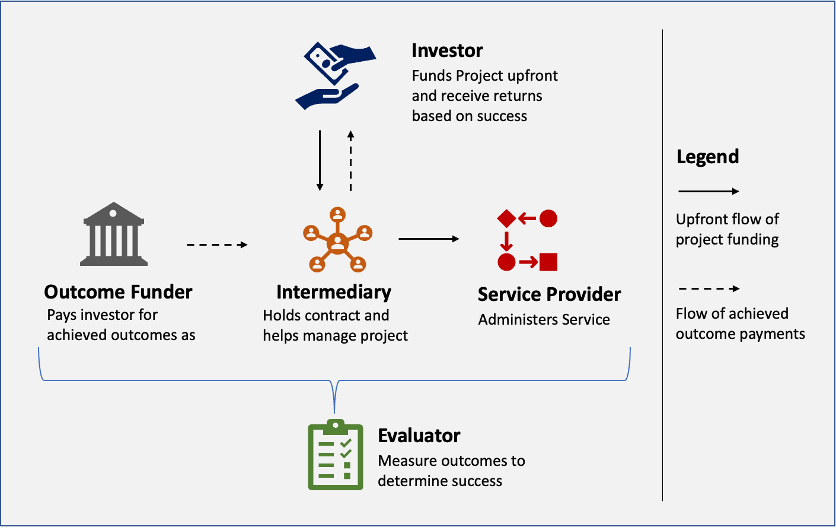
Moreover, we have blended our investment support with technical assistance and supported Fund Managers and investees in building new markets through policy inputs to Line Ministries directly or via industry fora, sharing global expertise and best practices of what works and what doesn’t. We have done this in bioenergy for instance to include it within India’s energy mix. Another dimension has been building capacity of small businesses in areas such as ESG, impact assessment with specific technical expertise or deepening development impact. We have worked with guarantees e.g. with the World Bank on climate initiatives and with SIDBI on loans to women borrowers to boost peri urban, rural and agri economies. The UK has also supported innovative structures like Development Investment Bonds to deliver results-based financing in education sector. In times of crisis, the UK partnered with our Fund Manager to provide liquidity support to investees so they could keep their businesses afloat and protect livelihoods of employees.
3. Given your wide experience, what are the emerging / priority areas or sectors (like healthcare, climate action) which you anticipate will attract greater investor attention in the next five years?
We anticipate the future emerging sectors will inter-alia include a) climate action sectors which can help India achieve the committed targets on Renewable energy and Net Zero b) technology led start-ups which can accelerate achievement of sustainable development goals.
We see significant traction in these sectors over the next 5 years. Under climate resilience, we are keen to see more private investment in adaptation and resilience segments. We would like to provide our support to build a market for mainstream investors to invest into technology for development. There is potential for more investment into sectors which lead to inclusive and sustainable growth for all sections of society, and not just in India but globally.
Our existing direct portfolio has about 60% investments in climate action sectors primarily in mitigation across areas such as waste management, electric vehicles, clean energy, and other emerging sectors. Under technology, we have supported businesses in sectors like clean tech, agri tech, health tech and edu tech. We have also partnered with several incubators and accelerators across IITs/IIMs and platforms like Indian Angel Network to help support techpreneurs solve complex development challenges using technology.
4. With gender being an increasingly important priority area and women being more vulnerable and underserved as a segment, what kind of initiatives etc is FCDO prioritising to support women socially and economically?
Working for gender equality forms a key part of a coherent UK foreign policy. It has been a known fact that the UK Government has long been at the vanguard of supporting the rights of women and girls around the world, through our development, diplomatic and legislative efforts. Specially in the post Covid 19 landscape, it has become even more important to help our partner countries like India to create opportunities for young people including women to propel in this new technology driven world. This includes, an emphasis on women’s role as leaders, employees, entrepreneurs, suppliers and customers.
The investment programmes in India are designed to improve gender and diversity in the target sectors. These include incentivising investments in women owned/ led enterprises, ensuring gender balance at senior levels in Fund Manager and board positions and employment of women at investee levels among others. At the design stage of our investment programmes itself, we strive for gender balance in the entire value chain through fair and equal procurements, robust impact measurement tools, and mapping with ESG framework. In the past, we have supported a big portfolio of microfinance institutions/ NBFCs which have provided credit products to numerous Self Help Groups, women borrowers from difficult geographies of India. Our programmes like the PSIG, Skills for Jobs, NEEV and others have contributed to providing access to financial services, finance, skills training, counselling, entrepreneurship training and employment opportunities to millions of women across different parts of India.
We also ensure to provide opportunities to women enterprise owners / fund managers by inviting them in key events and foras to showcase their good work and successes. This not only helps to inspire other women and girls and build social value of women, but also spread awareness among the male fraternity about the equal competencies that woman bring to the table and strive to create gender smart markets and workplaces.
Most of our existing and upcoming programmes are centred around clean tech, green enterprises and clean energy. Adopting a gender perspective to these climate change interventions is important to ensure that women’s skills and views are part of this growing industry. The socio-economic benefits of mainstreaming gender in the climate change interventions will have quadruple effect. Our ideology is that, gender is not a standalone subject. It in fact needs to be integrated from the very beginning in the design, implementation, and monitoring of green programmes. These can help build awareness, generate employment and entrepreneurs, increase women beneficiaries, get more women in boardrooms and thereby have lesser adverse impact of climate change on women population.
FCDO is committed to increase the efforts and leadership beyond the financial commitment for promoting gender equality. These efforts include working with the private sector and investors to mobilise new and innovative investments for women and girls; to put our diplomatic power to work raising global ambition and securing international commitments; and ensure we do not roll back on hard-won rights.
5. What can the blended finance and impact ecosystem do better to engage and receive funding support from gender focused CSRs, philanthropists and investor?
To fulfil social issues like gender gap, large amount of funds are required each year apart from the monies from the government, DFIs, & donor agencies. Theis funding gap can be bridged by mobilising funds from the private investors. Blended finance is one such popular instrument for encouraging the private investments that can contribute toward the SDGs. A more enabling environment is required in countries like India to scale these instruments. DFIs need to come up with coordinated strategy for credible standardised frameworks to measure social impact- which has till now limited the scale of blended finance. In order to increase it’s acceptance, we will need champions in government machinery to drive it nationally and disseminate the concept to the potential stakeholders. May be building a centralised repository of knowledge that shares lessons and learnings from current pilots can be formed. For example, Convergence is a subscription-based repository for blended finance data intelligence. Taking inspiration from this global network, a similar open-source platform can be created in India, to enable the free exchange of information and lessons learned to structure, design, and implement various types of blended finance instruments.
6. Skill development of women is a big socio-economic opportunity in India. With labor force participation of women facing greater challenges post COVID pandemic, is there an opportunity for blended finance to reduce skilling gaps and build collaborative solutions?
Covid 19 created disproportionate barriers for women and girls, increasing their social vulnerability and economic exclusion. The prolonged closure of skilling and educational facilities created new barriers for women who wanted to enter the labour force market. Many opted to leave jobs due to family constraints during the pandemic. However, in the post Covid landscape, it seems that the women can potentially form a big size of India’s labourforce. It is due to growing flexibility at workplaces, evolution of technology and emergence of new kinds of jobs. To tap this evolving landscape, women and girls will need to be made aware or get trained on several aspects- skill development (behavioural/technical), financial literacy, entrepreneurship, and incentives available (of starting business, workplace facilities, govt schemes) among others. These skills trainings needs should be integrated with measurable outcomes like employability, job retention and increased bargaining power for the trained individual and entrepreneurship in order to get outcome oriented results. To achieve this, flexible capital along with technical assistance support are best suited to achieve the desired results.
Blended finance de-risks the private players, yet, helps in attaining the planned outcomes effectively. It will be able to help bring in quality to the skills training through results based outcomes. Such instruments can target not just youth training, but also teacher training, master teacher training, institute/centre development, and integrating educational technology in teaching and learnings at scale. This model is getting embraced but at a very small scale in diff countries. It’s time that blended finance is adopted at scale to address the skills gaps in India to ensure quality over quantity perhaps.
7. What lessons can you share with other investors and asset managers, that may be operating at a smaller scale, on how to consider different blended finance instruments?
We encourage cross learning amongst investors. For both the investors and asset managers, it is quite important to understand the market and the context (needs, gaps and opportunities, risks); additionality of their intervention especially if they are deploying public funds, and their own risk-return-impact appetite and the role they wish to play in achieving outcomes. As there are multiple regulations affecting the different types of funding instruments, having the right legal advice at the outset is essential. Investors and fund managers should design and test new blended instruments and disseminate the learnings, of successes and failures, with the wider industry.
Capacity building, market knowledge and access to a wider network could be a few areas of support for smaller fund managers. Investors could dedicate resources (both human and capital) for soft support (through technical assistance, expertise, network etc.) under the overall blended finance approach.
8. Based on your experience in blended finance to date, what gaps and opportunities do you see in the blended finance market?
India has a huge funding gap in meeting the SDGs as noted above. Currently, most of the blended finance transactions chase a few successful enterprises or market funds. Investments in sectors such as fintech, health tech and ed-tech have focussed on high-income population and excluding the under-served. While, this does put these sectors on high growth trajectory, there is a need for more catalytical capital in underserved segments such as agri, rural economy and climate adaptation. Human capital and institutional capacity also need to be developed to boost investor perception in these segments and demonstrate their viability and ability to give returns. There is scope for more collaboration amongst investors to devise effective solutions to bring in greater impact in these segments– Industry bodies including IIC could play a role by convening the relevant stakeholders with thought leadership and catalyse action.
Nevertheless, the increasing awareness of impact investments (especially in areas such as climate) and ESG among global investor community is likely to increase the availability of blended capital, which could catalyse risky segments over time. For example, water sector hitherto believed to be commercially unviable is slowly gaining traction with few institutional investments. The institutional capacity and the regulatory environment would also need to evolve to support the effective use of the increasing capital pool.