Financing green transitions: RBI and SEBI updates
By Antaraa Vasudev
Founder- Civis

Civis bio is building a bridge between citizens and Governments, to ensure that people's voice isn't just heard but acknowledged and acted upon by those in power. They present various public policies being worked on by the government on our website, and allow you to share your feedback on them. This feedback gets passed on to the relevant authorities. They believe that it is essential that dialogue between citizens and government remains vibrant and thriving. Civis gives your opinion the ability to rise above the noise and be registered by your leaders.
Recent Developments in Sustainable Finance
Climate Change will continue to be one of the most critical issues of our time, something that the global society must come to an agreement on over the next few crucial decades. According to the International Monetary Fund, many nations are expected to face severe economic effects from climate change, with many low & middle income nations being particularly vulnerable. The Convention, the Kyoto Protocol and the Paris Agreement call for financial assistance from Parties with more financial resources to those that are less endowed and more vulnerable. Climate finance is needed for mitigation, because large-scale investments are required to significantly reduce emissions. Climate finance is equally important for adaptation, as significant financial resources are needed to adapt to the adverse effects and reduce the impacts of a changing climate. In India, since the middle of the 20th century, there has been an increase in average temperature, a decrease in monsoon precipitation, an increase in extreme temperature, droughts, and sea levels, as well as an increase in the frequency and intensity of severe cyclones, according to a report from the Ministry of Earth Sciences of the Indian government.
At the Glasgow Conference of the Parties-26 Summit, India committed to achieving net-zero emission status by 2070 and increasing the nation's renewable energy capacity to 500GW (five hundred giga-watts). In effect, meeting the nation's energy requirements via renewable energy reduces the economy's carbon intensity. Based on these commitments, the Government of India has initiated a few policies, such as phasing out coal usage, the National Biomass Co-firing policy, the National Mission on Battery Storage and Transforming Mobility, and Productivity Linked Incentives (PLI) Scheme on Advanced Cell Chemistry and Battery Storage.
Recently, the Securities and Exchange Board of India (SEBI) released a Consultation Paper on Green and Blue Bonds as a mode of Sustainable Finance. Simultaneously, the Reserve Bank of India (RBI) also released a 'Discussion Paper on Climate Risk and Sustainable Finance' and had invited comments and suggestions. The role of blended finance in India has taken on new frameworks with these interventions.
SEBI Consultation Paper on Green and Blue Bonds as a mode of Sustainable Finance
The approach of considering environmental, social, and governance factors when making financial sector investment choices is known as sustainable finance. This encourages long-term investments in sustainable economic activities and projects. This consultation paper of SEBI sought public feedback on the new suggested regulatory framework for sustainable finance avenues.
RBI Discussion Paper on Climate Risk and Sustainable Finance
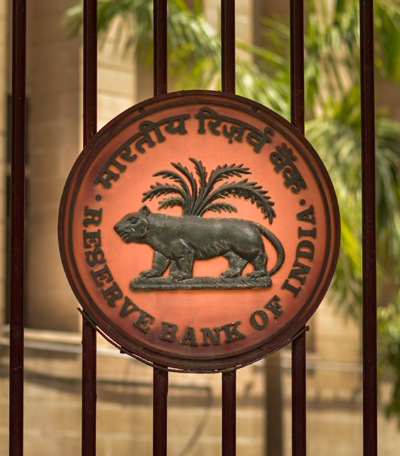
The Reserve Bank of India (RBI) also released a 'Discussion Paper on Climate Risk and Sustainable Finance' and had invited comments and suggestions. While discussing international studies, panels, and reports on global warming and greenhouse gas emissions, the RBI demonstrates how even a 1.5 to 2 degree Celsius rise in temperature has devastating consequences. It is also worth noting that climate change is causing financial risk by jeopardising the general stability of the financial system. Keeping in mind the economic threat of climate change and its national commitments and priorities, the Reserve Bank intends to prepare a strategy to tackle this issue.
The strategy by the Reserve Bank focuses on physical risks (the economic expenses and financial losses caused by climate change's growing frequency) and transition risks (risks arising from the process of adjustment towards a low-carbon economy). The report also emphasises how climate change-related financial risks differ from general financial risks. According to the paper, Regulated Entities (REs) must understand the relationship between climate-related and environmental risks and their commercial activities and evaluate the potential impact of such risks.
RBI and SEBI's move towards strengthening avenues for financing green transitions is notable for one significant reason: their use of a public feedback process. Public consultations are utilised as a key regulatory tool to improve the transparency, effectiveness and efficiency of policy and regulation. Since a change in rules inevitably affects all members of civil society, it is pertinent to include them in the law-making process to assess the impact and minimise costs related to such regulations. When used effectively, public consultations not only improve the quality of regulation but also help in strengthening compliance and reducing enforcement costs.
Public consultations are especially relevant while formulating policies and regulations that deal with climate change. The effects of climate change vary depending on the socio-economic positionality of the stakeholder. For example, indigenous and marginalised communities are disproportionately impacted as they rely on their surrounding environment for food, cultural practices and income. On the other hand, urban populations face increased heat waves and are susceptible to vulnerabilities of ageing infrastructure.
Policies that deal with climate change tend to focus on climate mitigation and adaptation measures. These measures primarily affect two key stakeholders; industry organisations and citizen groups, particularly marginalised communities. The debate around the changes in the Environmental Impact Assessment Notification 2020 highlighted the diametrically opposite viewpoints of these stakeholders. For instance, while industry players prefer low compliance requirements for faster acquisition and implementation of projects, citizens prefer strong safeguards to protect their surrounding ecology. In such cases of conflicting stakeholder perspectives, it is crucial for policymakers to carefully implement public feedback mechanisms designed to facilitate implementation and improve compliance and consensus.
The Banking & Finance industry can play a key role in mitigating and rectifying the damage caused to the environment so far by pivoting investment towards sustainability. SEBI and RBI have taken steps towards pushing this change, and only robust action from the industry leaders over the next few years can define a shining path forward for India's development agenda. To keep abreast with other similar regulatory developments, visit TeamleaseRegTech or Civis.Vote.